
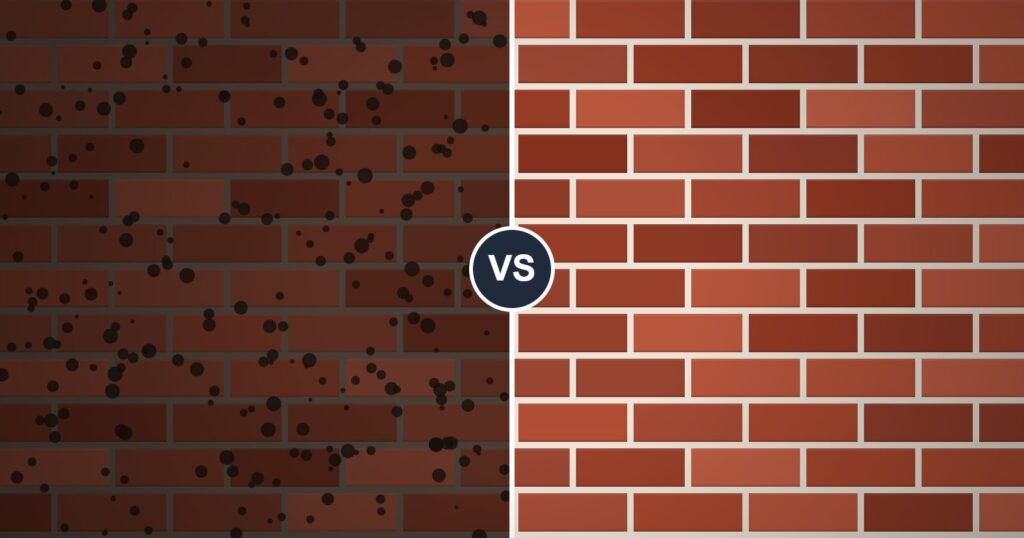
If your brick has crumbling, sandy, or recessed mortar, you need one of two repairs: tuckpointing or repointing. The terms get swapped constantly, even by contractors, but they describe different jobs with different costs and different results. Choosing wrong can mean paying twice, or watching water keep getting into walls that look freshly repaired.
This guide explains the difference between tuckpointing vs repointing, how to tell which one your home needs, and why Central Ohio weather makes mortar maintenance more urgent here than in many other places. If you are weighing a repair before winter, read this first.
What is the difference between tuckpointing and repointing?
Repointing means removing deteriorated mortar from the joints and replacing it with fresh mortar of the same color, texture, and strength. The mason grinds or chisels out the old mortar to a depth of roughly twice the joint width, cleans the joint, and packs in new mortar in layers. The goal is a structural repair that restores the wall’s ability to shed water.
Tuckpointing is a more detailed, cosmetic technique. The mason fills the joints with mortar matched to the brick color, then adds a thin, contrasting line of putty on top to create the look of fine, crisp joints. Historically it was used to make rough or uneven brick appear precisely laid.
In everyday use, many contractors in Ohio say “tuckpointing” when they mean repointing. That is why you should ask for a written scope that states the depth of mortar removal, the mortar type, and how the joints will be finished. Our tuckpointing and repointing work always starts with that scope so you know what you are paying for.
A simple rule: if water is getting in, you need repointing. If the structure is sound and you want a sharper appearance, tuckpointing in the traditional sense may fit.
Signs your mortar joints are failing
Mortar is designed to wear out before the brick does. It is the sacrificial layer, so some wear is normal. These are the signs it has gone too far:
- Crumbling or sandy texture. If you can scrape mortar out with a key or your fingernail, it has lost its bond.
- Recessed joints. Mortar that sits more than about a quarter inch behind the brick face lets water pool on the ledges.
- Visible cracks. Hairline cracks between brick and mortar are the first path for moisture.
- Loose or shifting brick. If a brick moves when pressed, the surrounding mortar is no longer holding it.
- Efflorescence. White, chalky deposits mean water is moving through the wall and carrying salts to the surface.
- Interior symptoms. Damp patches, peeling paint, or musty smells on walls behind brick are often tied to open joints outside.
Check chimneys, south-facing walls, and areas under downspouts first. Those spots take the most abuse. If you see two or more of these signs in one area, have a mason look at it before the next freeze.
Why Ohio freeze-thaw cycles destroy mortar
Water is the real enemy of masonry, and Columbus gives it plenty of chances. Late fall through early spring, temperatures swing above and below freezing many times. Each time, any water inside a joint freezes, expands, and pushes against the surrounding material. When it thaws, it leaves a little more space behind.
One cycle does little. Dozens in a winter, repeated over years, turn small cracks into open joints and can spall the face off the brick itself. Once brick faces start flaking, you are no longer looking at a mortar repair. You are looking at brick replacement, which costs far more.
That is why timing matters. Repointing done in fall lets new mortar cure before the hardest freezes. Mortar needs mild, stable temperatures to set properly, so a repair squeezed in during a cold snap can fail early. If you are reading this in late October, book soon: crews fill up as the weather window closes. Our Columbus masonry crew schedules around the forecast so the work cures the way it should.
What affects the cost and timeline
No honest contractor can quote a number without seeing the wall. Mortar repair is labor-heavy, and a few factors drive the price more than anything else:
- Area and joint count. Cost scales with the number of linear feet of joint, so a small chimney and a full two-story wall are very different jobs.
- Access. Work above a single story needs scaffolding or lifts, which adds time and expense.
- Mortar condition and depth. Joints that are crumbling deep into the wall take longer to clear than shallow, surface-level wear.
- Brick type and joint size. Narrow joints on tight-laid brick take more care than wide, traditional joints.
- Mortar matching. Custom color and sand blends take extra testing, especially on older homes.
Timelines vary just as much. A small repair on one wall or chimney can be done in a day or two. A full home repoint can take a crew a week or more, depending on weather and size.
The cheapest bid is not always the best value. A rushed job that skips proper mortar removal depth often fails within a few winters, and then you pay for the work again. Ask each contractor how deep they grind out joints and what mortar mix they use. Those two answers tell you a lot.
Matching mortar on older Columbus homes
The most common repointing mistake is using mortar that is too hard. Modern Portland-cement mortars are very strong, but they can be harder than the soft, older brick found in historic neighborhoods like German Village, Bexley, and parts of Upper Arlington. When hard mortar is paired with soft brick, the brick takes the stress of expansion and contraction instead of the mortar. The result is cracked and spalled brick faces, which are expensive to fix and impossible to undo.
Older homes often need a softer, lime-rich mortar that moves with the wall and lets moisture escape. Color and texture matter too. A bright, smooth patch on a weathered wall looks wrong and signals a poor match.
Newer brick homes, like the Georgian-style houses common in New Albany, usually tolerate standard modern mortars well. Even so, the color and joint profile should match what is already there.
If you are unsure what you have, a good mason will test the existing mortar before quoting. You can also see how we handle matching repairs in our recent masonry projects.
How to choose a masonry contractor
Mortar work looks simple from the street, but the quality is in details you cannot see once the job is done. Before you hire, check these points:
- License and insurance. Ask for proof of both. Work at height carries real risk.
- A written scope. It should state joint depth, mortar type, and how the finish will look.
- Local experience. A crew that works in Central Ohio understands freeze-thaw damage and local brick.
- Clean work habits. Grinding creates dust, so ask how they protect landscaping, windows, and neighbors.
- Clear communication. You should get a straightforward quote and an honest timeline.
Ask to see photos of past repairs, and compare at least two quotes on the same scope, not just on price.
Frequently asked questions
Is tuckpointing the same as repointing? Not strictly. Repointing replaces failed mortar for structural protection. Traditional tuckpointing adds a decorative line over matched mortar. In practice, many people use the words interchangeably.
How long does repointed brick last? With proper prep and a matched mortar, repointing can last decades. Poor drainage and weak prep are the usual causes of early failure. See our masonry FAQs for more.
Can I repoint in winter? It is best avoided. Mortar needs stable, mild temperatures to cure, so fall and spring are the safer windows in Ohio.
Can I do it myself? Small spots are possible, but removing mortar at the wrong depth or using the wrong mix can damage brick permanently. Larger areas and anything above ground level are best left to a mason.
Get your mortar checked before winter
If your brick shows any of the warning signs above, a quick on-site look can tell you whether you need a small repair or a full repoint. Request a free estimate or call Cap City Exterior at 614-682-9809. We serve Columbus, New Albany, and nearby Central Ohio communities.